Window styles
Double-Hung vs Casement Windows: Which Is Better?
Compare double-hung vs casement windows on airflow, energy efficiency, cleaning and cost. Find the right style for each room in your Ohio home.
9 min read
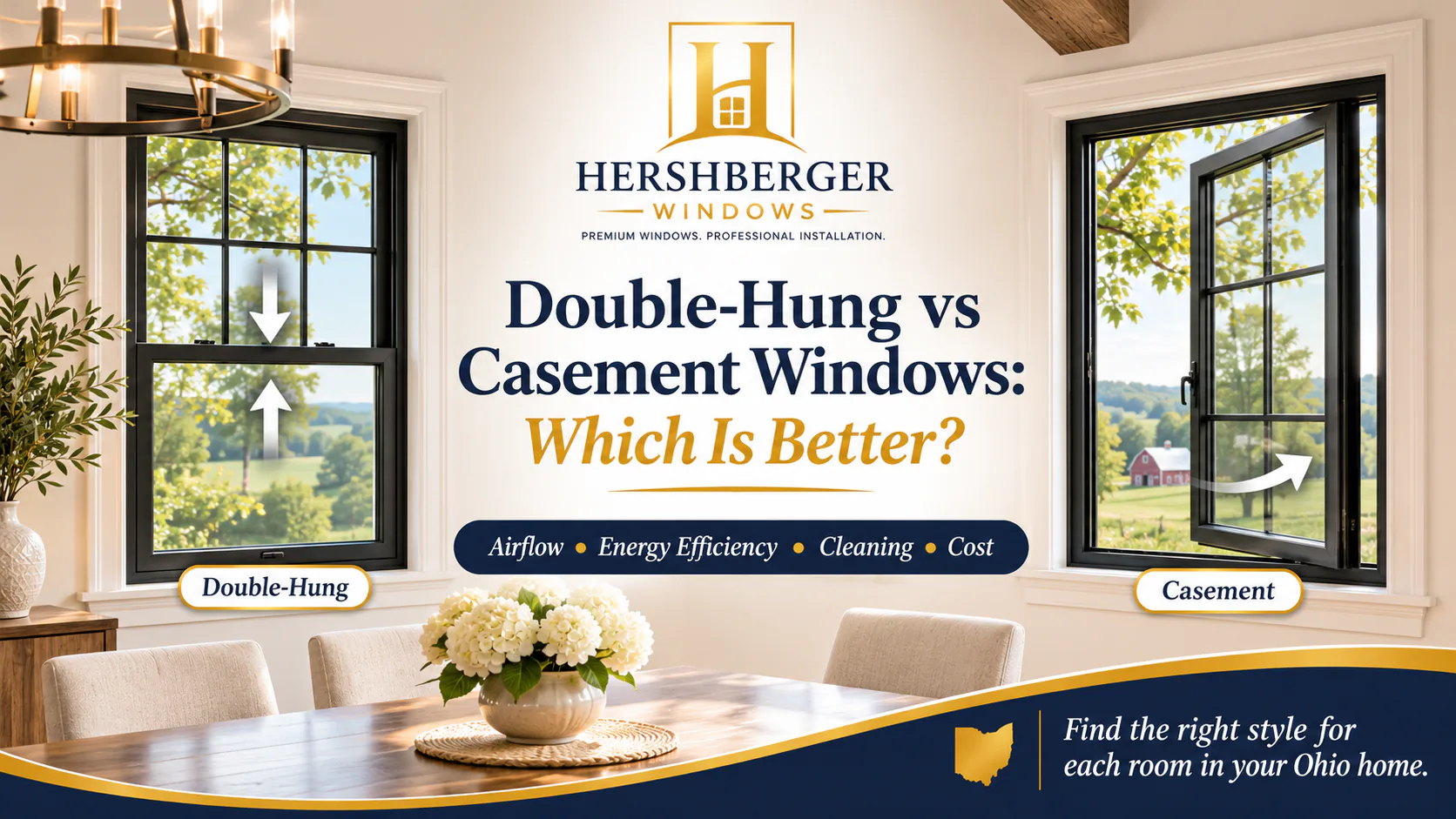
Drafty window sashes let heat escape all winter, which raises your heating bills. Stiff or hard-to-reach windows also make fresh air and cleaning a daily chore.
When you replace them, the style you choose decides how well each room seals, ventilates and cleans. Double-hung and casement windows are two of the most common options, but each one suits different rooms and homes.
In this guide, you will see how double-hung vs casement windows compare on energy, airflow, cost and upkeep.
Key takeaways
- Double-hung windows slide up and down and suit traditional Ohio homes.
- Casement windows crank outward and open fully for more fresh air.
- Casements press against the frame when closed, which gives them a tight seal.
- Double-hung sashes tilt in, so upper-floor windows are easy to clean.
- Casements usually cost more than double-hung windows of the same size.
How do double-hung and casement windows work?
Both styles open, but they move in very different ways. That movement affects your airflow, how easily you reach the window and how well it seals.
Double-hung windows
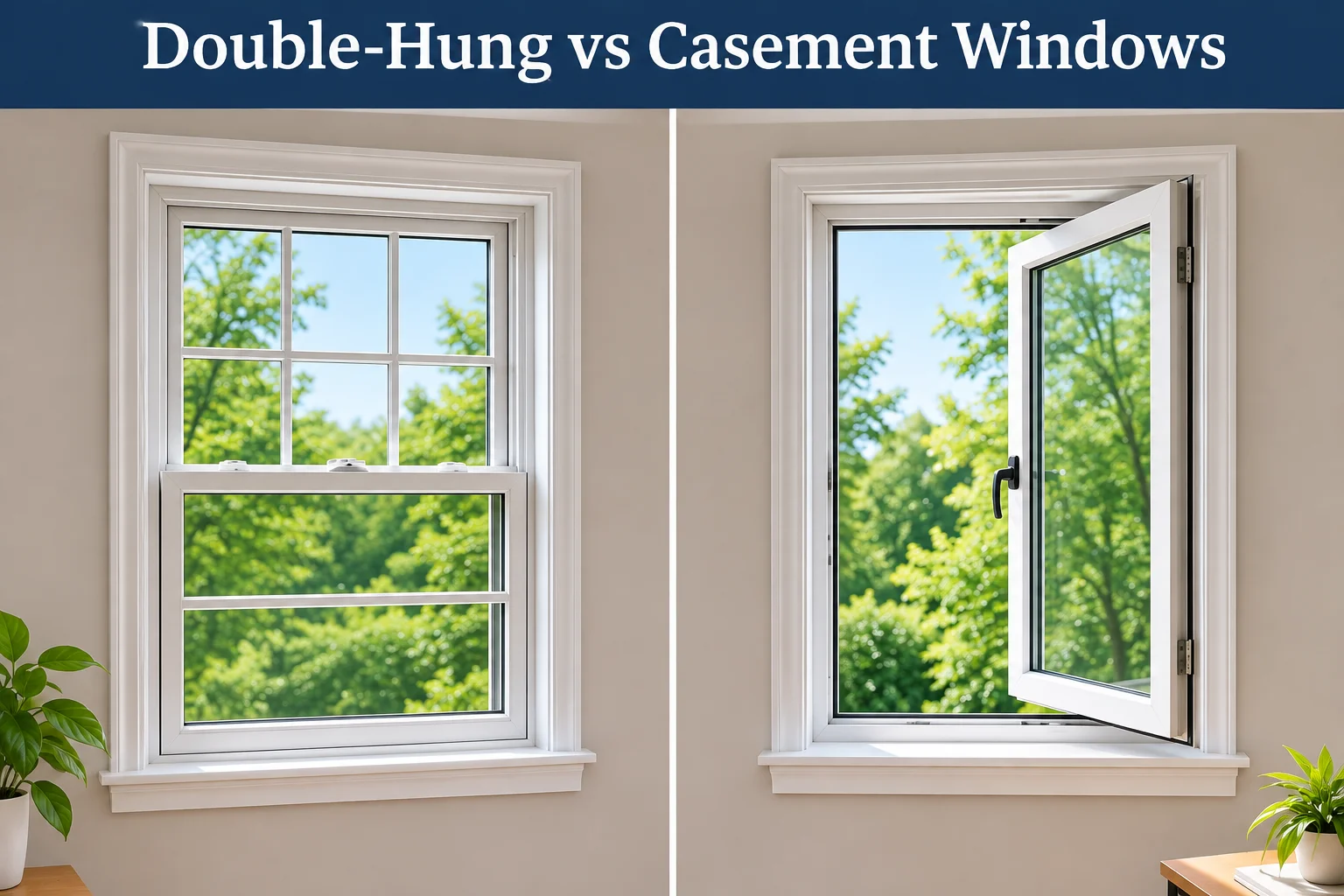
A double-hung window has two sashes that both slide up and down. You can open the top, the bottom or both at once. On most new models, both sashes tilt in, so you can clean the outside glass from indoors.
Casement windows
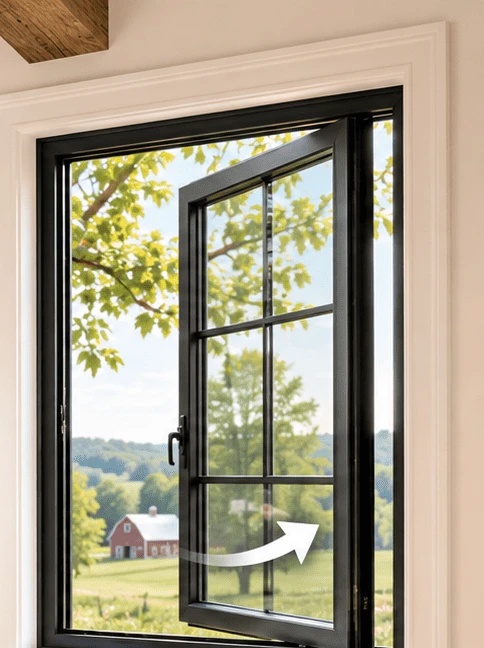
A casement window is hinged on one side and opens outward with a crank. The whole sash swings open, and no rail crosses the middle of the glass. As a result, you get a clear view and the largest possible opening for fresh air. Its screen sits on the inside.
Double-hung vs casement windows at a glance
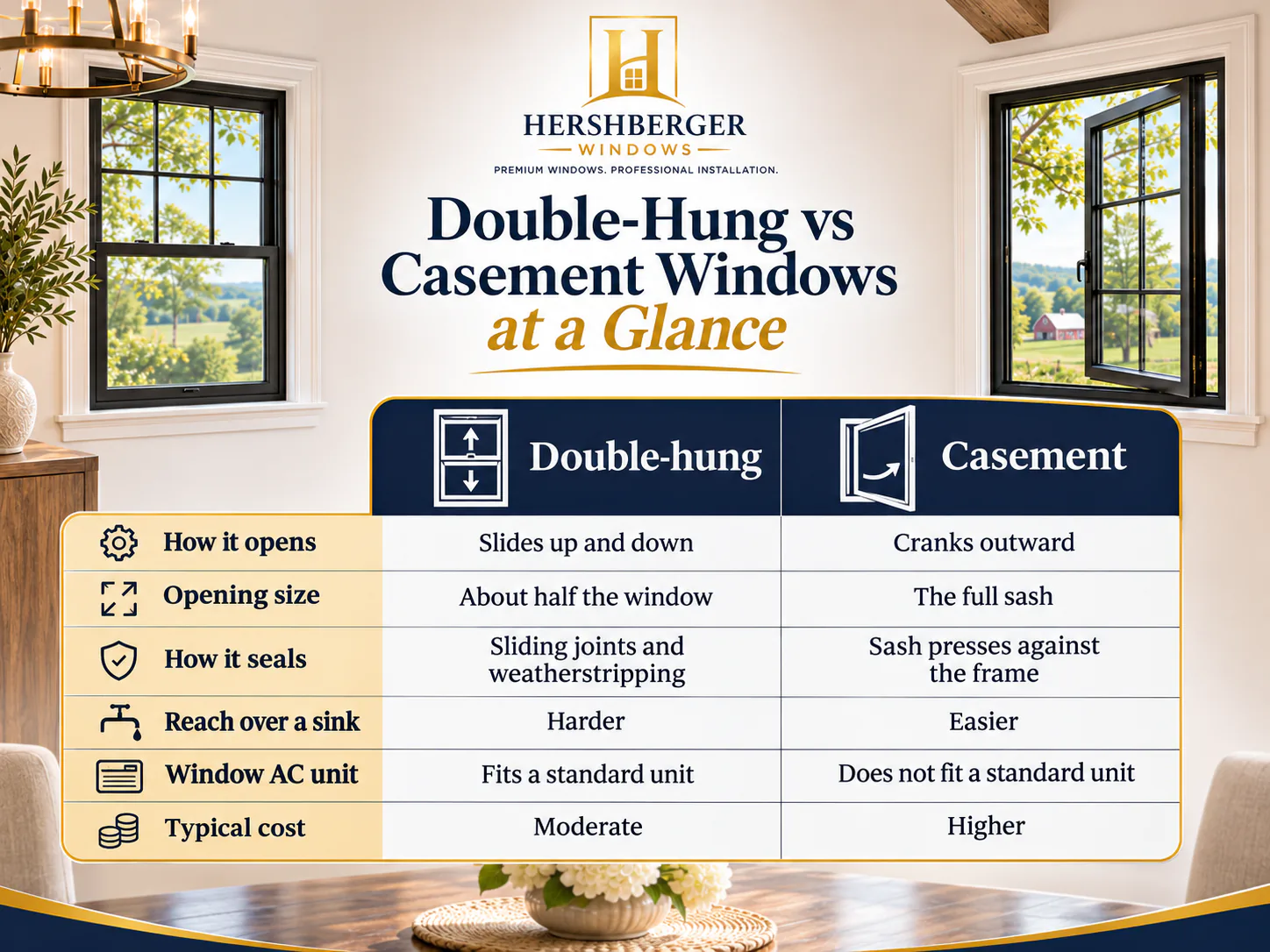
Homeowners usually ask us about the same six points. This table sums them up, and the sections below explain each one.
| Feature | Double-hung | Casement |
|---|---|---|
| How it opens | Slides up and down | Cranks outward |
| Opening size | About half the window | The full sash |
| How it seals | Sliding joints and weatherstripping | Sash presses against the frame |
| Reach over a sink | Harder | Easier |
| Window AC unit | Fits a standard unit | Does not fit a standard unit |
| Typical cost | Moderate | Higher |
Which window is more energy efficient?
In Northeast Ohio, winter wind and cold test every seal on your windows. Casements close by pressing the sash against the frame, and wind pushes them even tighter. Double-hung windows seal along sliding joints, so they rely more on weatherstripping.
A well-built double-hung window can still perform very well. Most ProVia and Andersen lines in both styles come with Low-E glass and argon gas. Before you decide, compare the U-factor and air leakage ratings on each window's NFRC label. A lower U-factor means less heat escapes, so your rooms stay warmer.
On exposed, windy walls, a casement is often the stronger choice. Our energy-efficient windows come in both styles, so you do not have to trade comfort for looks.
Ohio summers matter too. On hot, humid days, a casement can catch a passing breeze and push it into the room. A double-hung window lets you open the top sash, so warm air near the ceiling can escape.
For homes on open, windy lots, triple-pane glass adds extra protection. ProVia offers a triple-pane glass package, and Andersen offers triple-pane glass in its A-Series and E-Series.
Airflow, cleaning and everyday use
How a window opens shapes how you use it every day. Before you choose, weigh these five differences.
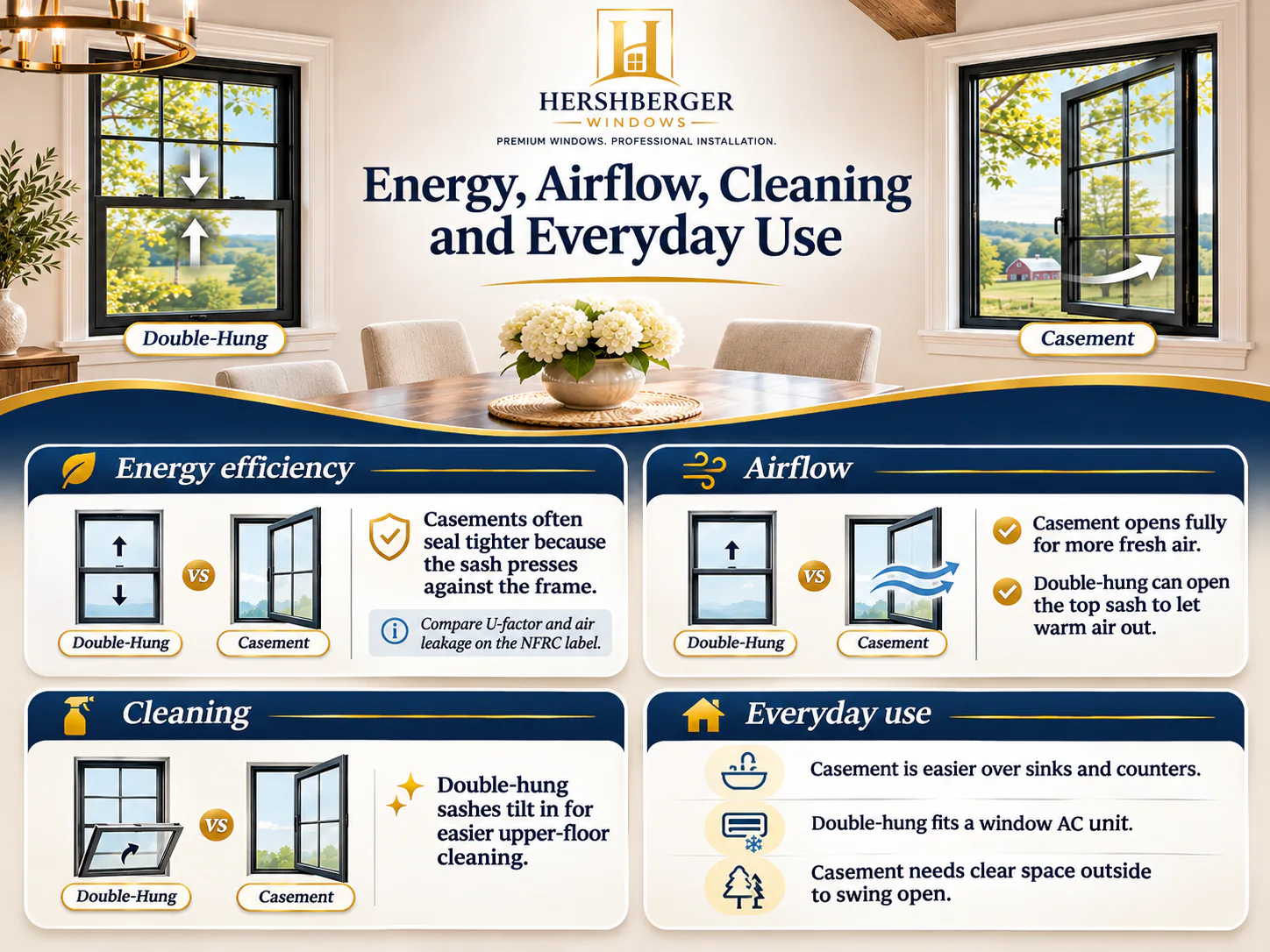
- Airflow:
- A casement opens fully and can catch side breezes. A double-hung opens about halfway, but you can lower the top sash to let warm air out.
- Reach:
- A casement opens with a crank, so it is easier to use over sinks and counters. The crank also needs little strength.
- Cleaning:
- Double-hung sashes tilt in, which makes upper-floor windows much easier to clean.
- Air conditioners:
- A double-hung window holds a standard window AC unit, while a casement does not.
- Outside space:
- A casement needs clear space outside to swing open, so check decks, walkways and shrubs.
Looks, views and screens
The two styles look quite different from inside your home. That difference affects your view, your home's style and where the screen sits.
A double-hung window has a rail across the middle, where the two sashes meet. That rail gives a classic look, but it also breaks up your view. A casement has one large pane of glass, so you get an open, unbroken view of your yard. Both styles can have grids, such as colonial or farmhouse patterns, for a traditional look.
Screens work differently as well. A casement screen sits on the inside, because the sash swings outward. A double-hung screen sits on the outside. ProVia double-hung windows include BetterVue mesh for a clearer view.
ProVia and Andersen options in each style
Both brands we install make double-hung and casement windows, but their lines differ. Knowing which line offers what makes it easier to compare quotes.
ProVia
ProVia builds its windows in Strasburg, Ohio, close to our Sugarcreek office. You can choose ProVia double-hung windows in the Endure, Aeris, Aspect and ecoLite lines. ProVia casements come in the Endure, Aspect and Aeris lines, with a fold-away crank. The Endure, Aspect and Aeris lines are ENERGY STAR certified, and our windows carry a lifetime limited warranty.
Andersen
Andersen offers double-hung windows in its 100, 200, 400, A-Series and E-Series lines. Its casements come in the 100, 400, A-Series and E-Series lines. The 100 Series uses Fibrex composite, and some series offer power operation for casements. Andersen covers glass for 20 years and other parts for 10 years.
Maintenance and long-term care
Every window has moving parts, so a little care keeps it working well for years. The parts that need attention depend on the style.
- Double-hung:
- Balances hold each sash in place, and tilt latches let the sash tip in. Over time, these parts can wear and make the window hard to open.
- Casement:
- The crank, hinges and lock do most of the work. Keep them clean, and check that the sash closes evenly.
- Both styles:
- Clean the weatherstripping, and keep sills free of dirt and leaves.
Worn parts do not always mean you need a new window. Sometimes a repair fixes the problem, and we will tell you when that is the case.
How much do double-hung and casement windows cost?
Casement windows usually cost more than double-hung windows of the same size. The crank hardware and hinged sash add to the price. Nationally, installed double-hung windows cost about $350 to $2,500 each, while casements cost about $400 to $3,000 each.
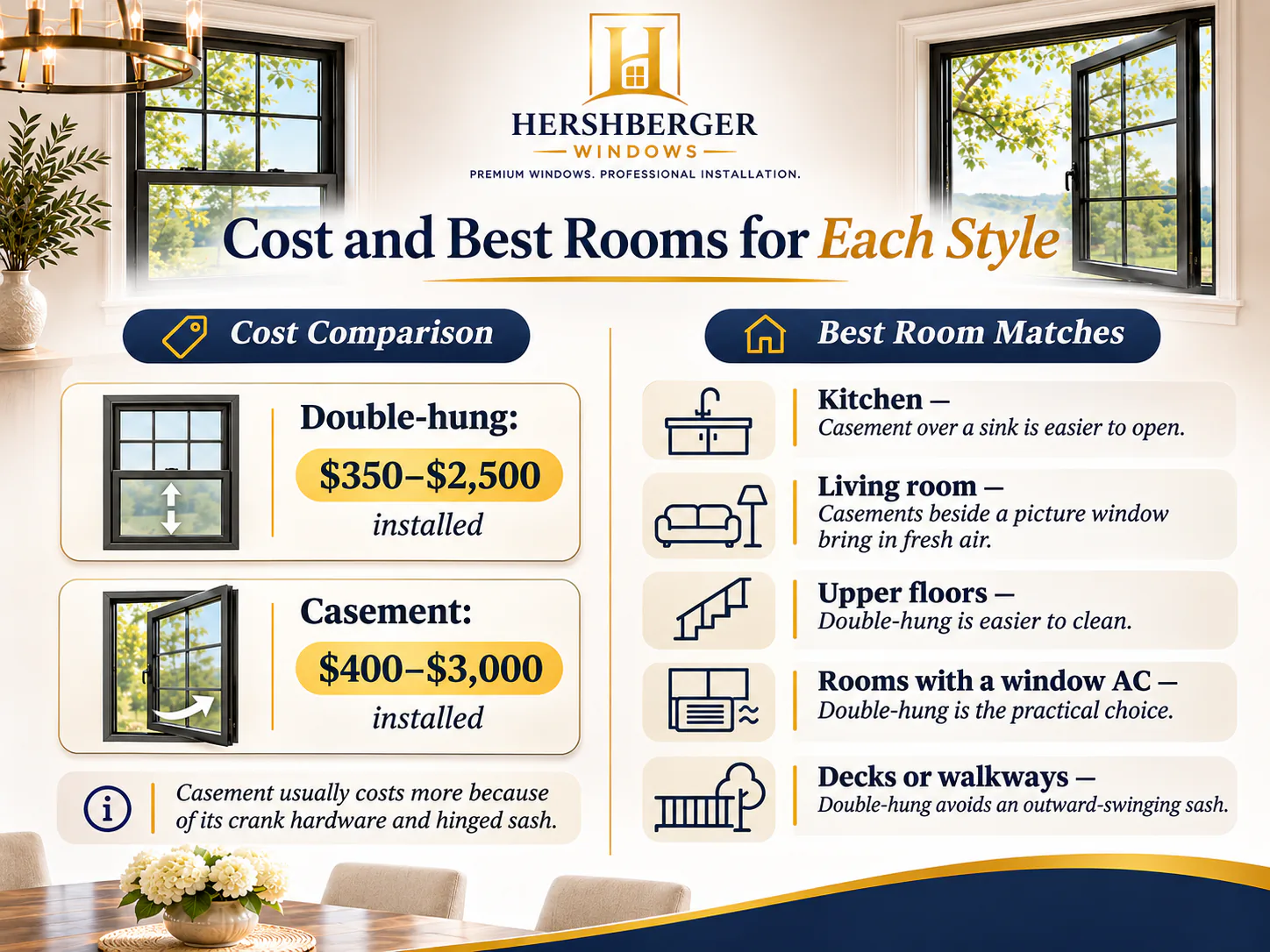
These figures are examples, not a quote. Your final price will depend on the window size, frame material, glass and installation method. To spread the cost over time, ask about our financing options.
Which style suits each room in your home?
Most homes use both styles in different rooms. Each space asks something different of its windows, so match the style to how you use the room.
- Kitchen:
- A casement over the sink is easier to open across the counter.
- Living room:
- Two casements beside a picture window give you both light and fresh air.
- Bedrooms:
- Either style can work, but the window must meet local emergency exit rules. A casement often gives a larger clear opening for the same size.
- Bathroom:
- A casement with privacy glass lets air in while keeping the room private.
- Upper floors:
- Double-hung windows are easier to clean there, because both sashes tilt in.
- Hard-to-reach spots:
- Above a tub or stairwell, a casement crank is easier to reach than a double-hung sash.
- Walls beside a deck or walkway:
- A double-hung window is safer, because a casement sash swings into the path.
- Rooms with a window AC unit:
- A double-hung window is the practical choice.
Which style fits your home's structure?
The age and build of your home affect which style will fit and how it will look. Here is how each style works with the homes we see across Northeast Ohio.
Older farmhouses and century homes
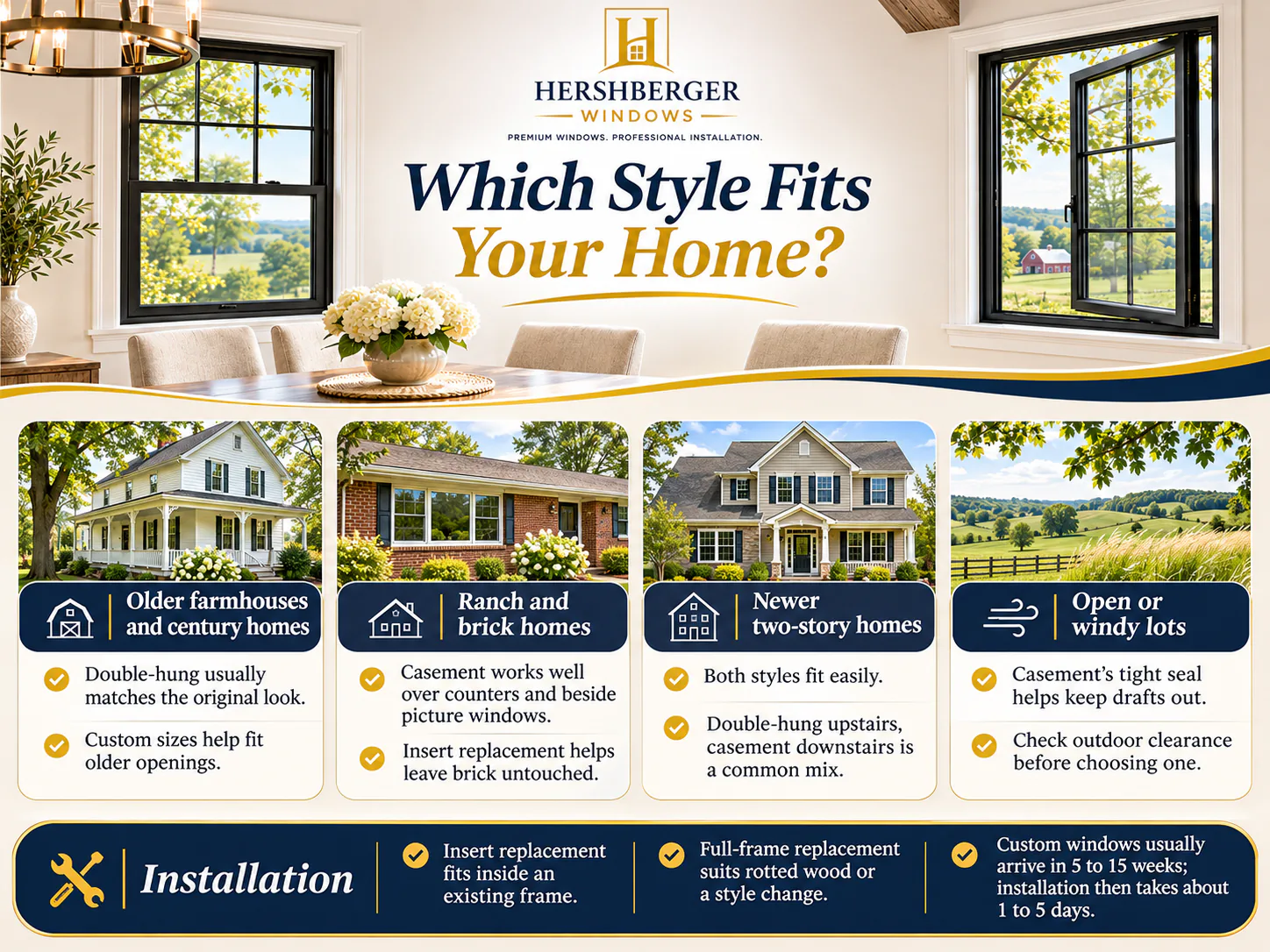
Double-hung windows match the look that most older homes were built with. Your openings may be odd sizes or slightly out of square, so you may need custom-sized windows. When the wood frame is soft or rotted, a full-frame installation gives you a solid, sealed opening. Homes built before 1978 may also have lead paint, so your installer must follow EPA lead-safe rules.
Ranch and brick homes
Ranch homes often have wide, low openings and windows above kitchen counters. A casement beside a picture window suits those openings well. In brick homes, an insert replacement fits inside the existing frame and leaves the brick untouched.
Newer two-story homes
Newer homes usually have standard sizes, so both styles fit easily. Upstairs, double-hung windows make cleaning simple because both sashes tilt in. Downstairs, casements can give you more airflow and a more modern look. Both rank among the best window styles for Ohio homes, so your taste can guide the final choice.
Homes on open or windy lots
Many rural homes in Holmes and Tuscarawas counties face open fields and strong wind. On those walls, a casement's tight seal helps keep drafts out. Before you choose one, make sure there is clear space outside for the sash to swing.
What to expect from installation
Most replacements use one of two methods, and the right one depends on your frames. An insert fits inside your existing frame and usually costs less. A full-frame replacement removes the old frame, which suits rotted wood or a change in window style.
If you switch from double-hung to casement, your installer checks the opening size and the clearance outside. Very wide openings often work better as two casements than as one. Custom windows usually arrive in about 5 to 15 weeks. Installation then takes about 1 to 5 days.
So, which window should you choose?
Neither style wins in every room. Your choice depends on how you use each space and the look you want for your home.
- Choose double-hung windows
- for traditional homes, upper floors and rooms with a window AC unit.
- Choose casement windows
- for kitchens, windy walls and rooms where you want the most fresh air.
Many Ohio homeowners mix both styles, which gives each room the window that suits it best.
Double-hung vs casement windows: FAQs
These are the questions we hear most during estimates. Each answer helps you narrow down the right style.
Are casement windows more energy efficient than double-hung windows?
Casements often seal tighter, because the sash presses against the frame. Still, compare the U-factor and air leakage on each window's NFRC label before you decide.
Which is cheaper, double-hung or casement?
Double-hung windows usually cost less. Casements cost more because of their crank hardware and hinged sash.
Can you put a window air conditioner in a casement window?
No, a standard window AC unit does not fit a casement. For that, you need a double-hung window.
Which window is easier to clean?
Double-hung windows are easier to clean on upper floors. Both sashes tilt in, so you can reach the outside glass from indoors.
Can you replace double-hung windows with casement windows?
Yes, in most cases. Your installer will check the opening size and the outside space the sash needs to swing.
Do casement windows let in more air than double-hung windows?
Yes, they do. A casement opens the full sash, while a double-hung window opens only about half the window.
Which window style is better for an older home?
Double-hung windows usually match the original look of older Ohio homes. Custom sizes help them fit openings that are out of square.
Find the right window style for your home
Double-hung windows give you a classic look, easy cleaning and room for an AC unit. Casement windows give you more airflow, a tighter seal and easier reach. The best choice depends on the room, your home's style and your budget.
Hershberger Windows installs both styles from ProVia and Andersen across Northeast Ohio. During a free estimate, we look at each room and give you an itemized written quote.
Disclaimer: The information provided in this blog is for general informational purposes only. For professional assistance and advice, please contact experts.